The 17 SDGs: Shaping the Future of Sustainable Development
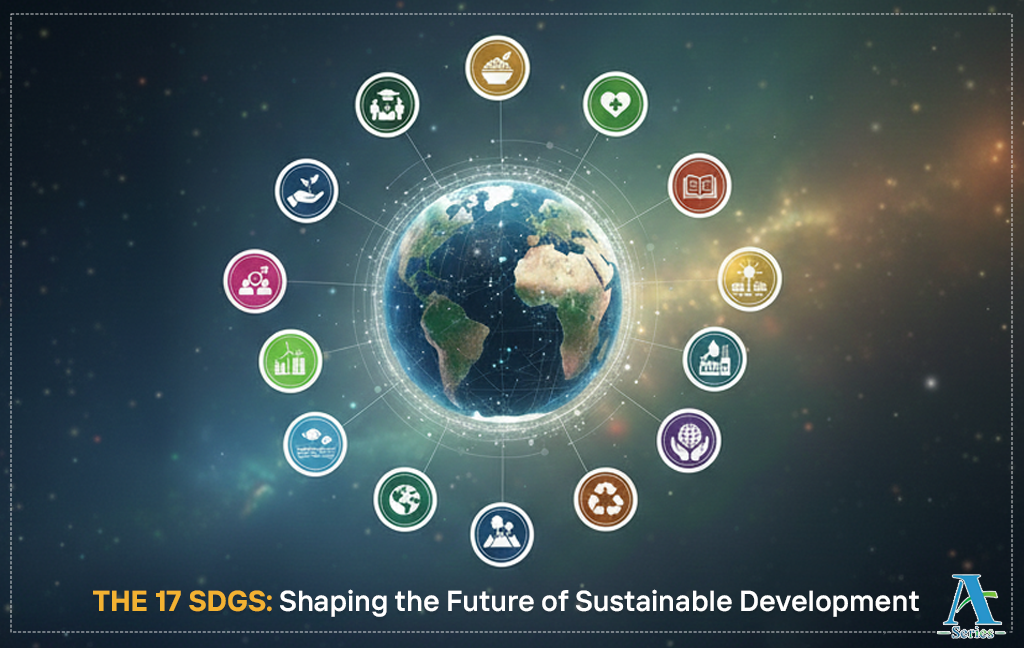
In 2015, all United Nations Member States adopted the 2030 Agenda for Sustainable Development, a shared global framework to address the world’s most pressing economic, social, and environmental challenges. At the heart of this agenda are the 17 Sustainable Development Goals (SDGs) a universal call to action to end poverty, protect the planet, and ensure peace and prosperity for all by 2030.
Unlike earlier development frameworks, the SDGs are integrated, indivisible, and universally applicable, making them relevant to governments, businesses, institutions, and citizens alike. Each goal acts as a pillar of sustainable development, supported by specific targets and measurable indicators.
The 17 Sustainable Development Goals
SDG 1: No Poverty
This goal seeks to eradicate extreme poverty in all its forms by ensuring access to basic services, social protection systems, economic resources, and resilience against climate-related and economic shocks. It emphasizes inclusive growth so that development benefits reach the most vulnerable sections of society.
SDG 2: Zero Hunger
SDG 2 aims to end hunger and all forms of malnutrition while promoting sustainable and resilient agricultural systems. It focuses on food security, improved nutrition, support for small-scale farmers, and sustainable food production that safeguards ecosystems.
SDG 3: Good Health and Well-being
This goal ensures healthy lives for people of all ages by strengthening healthcare systems, reducing maternal and child mortality, combating communicable and non-communicable diseases, and improving access to affordable and quality healthcare services.
SDG 4: Quality Education
SDG 4 promotes inclusive, equitable, and quality education and lifelong learning opportunities. It highlights the importance of access to primary, secondary, and higher education, as well as skill development aligned with employment and sustainable development needs.
SDG 5: Gender Equality
This goal focuses on eliminating all forms of discrimination and violence against women and girls. It promotes equal participation in leadership, access to education and employment, and recognition of unpaid care and domestic work.
SDG 6: Clean Water and Sanitation
SDG 6 ensures universal access to safe drinking water, sanitation, and hygiene. It also emphasizes sustainable water management, wastewater treatment, water-use efficiency, and protection of freshwater ecosystems.
SDG 7: Affordable and Clean Energy
This goal aims to ensure access to affordable, reliable, sustainable, and modern energy for all. It supports renewable energy deployment, energy efficiency improvements, and investments in clean energy infrastructure.
SDG 8: Decent Work and Economic Growth
SDG 8 promotes sustained and inclusive economic growth, productive employment, and decent work conditions. It focuses on labour rights, workplace safety, youth employment, and sustainable economic productivity.
SDG 9: Industry, Innovation, and Infrastructure
This goal supports resilient infrastructure, inclusive industrialization, and innovation. It encourages research and development, technological advancement, and sustainable industrial practices.
SDG 10: Reduced Inequalities
SDG 10 aims to reduce income and social inequalities within and among countries by promoting inclusive policies, equal opportunities, and fair representation in economic and political systems.
SDG 11: Sustainable Cities and Communities
This goal focuses on making cities inclusive, safe, resilient, and sustainable. It addresses urban planning, affordable housing, sustainable transport, disaster risk reduction, and improved air quality.
SDG 12: Responsible Consumption and Production
SDG 12 promotes efficient resource use, waste reduction, recycling, and circular economy principles. It emphasizes sustainable supply chains and environmentally sound management of waste and chemicals.
SDG 13: Climate Action
This goal calls for urgent action to combat climate change and its impacts through mitigation, adaptation, climate resilience, and alignment with global climate agreements.
SDG 14: Life Below Water
SDG 14 aims to conserve and sustainably use oceans and marine resources by reducing marine pollution, preventing overfishing, and protecting coastal and marine ecosystems.
SDG 15: Life on Land
This goal focuses on protecting terrestrial ecosystems, managing forests sustainably, combating desertification, and halting biodiversity loss.
SDG 16: Peace, Justice, and Strong Institutions
SDG 16 promotes peaceful and inclusive societies by ensuring access to justice, reducing corruption, protecting human rights, and strengthening accountable institutions.
SDG 17: Partnerships for the Goals
The final goal emphasizes strengthening global partnerships through finance, technology transfer, capacity building, and multi-stakeholder collaboration to achieve all SDGs.
Why the SDGs Matter for Businesses and Institutions
The SDGs are no longer aspirational ideals they are strategic and regulatory imperatives. Governments are aligning policies, regulations, and reporting frameworks with SDG targets, while investors and stakeholders increasingly evaluate organizations through ESG and sustainability lenses.
For businesses, aligning with the SDGs enables:
- Improved regulatory compliance and risk management
- Stronger ESG performance and investor confidence
- Innovation in sustainable products and services
- Long-term value creation and brand credibility
-
SDGs in Practice: From Global Vision to Ground-Level Action
- While the SDGs provide a universal framework, their real impact lies in how effectively they are translated into policies, projects, and operational practices. Countries localize SDG targets through national development plans, while businesses integrate them into corporate strategies, risk management systems, and sustainability reporting frameworks.
- For example, goals related to responsible consumption (SDG 12), climate action (SDG 13), and decent work (SDG 8) are increasingly reflected in environmental regulations, supply-chain due diligence requirements, and ESG disclosure norms. This shift signals a clear transition from voluntary sustainability commitments to mandatory compliance-driven action.
-
Why Early Action Matters
- Organizations that proactively align with the SDGs gain strategic advantages. Early action enables smoother compliance with emerging regulations, improved access to sustainable finance, and stronger stakeholder trust. It also allows institutions to shape industry best practices rather than react to regulatory enforcement.
- More importantly, SDG alignment drives innovation—encouraging cleaner technologies, efficient resource use, and inclusive business models that support long-term resilience.
Conclusion: From Commitment to Execution
The 17 SDGs offer a clear roadmap toward a sustainable, inclusive, and resilient future. Yet progress depends on moving beyond intent to structured execution, measurable outcomes, and accountable partnerships.
Organizations that embed the SDGs into their core strategies do more than support global development they strengthen resilience, enhance regulatory readiness, and emerge as responsible, future-ready leaders in an evolving sustainability landscape.
Delivering on the SDGs is not the role of governments alone; it is a shared global responsibility that demands collective action across sectors.